Insulation Removal in El Segundo, CA
Energy-Saving Insulation Removal in El Segundo, CA for El Segundo, CA Homes — Licensed & Insured
Need insulation removal in El Segundo, CA? Cool Zone Insulation offers safe, professional removal for attics & crawl spaces. Call 310-861-9135 for a free quote.
Insulation removal is the professional process of safely extracting old, damaged, contaminated, or inefficient insulation materials from attics, crawl spaces, and wall cavities — restoring your home’s thermal envelope and indoor air quality. In El Segundo, CA, this service is especially critical due to the city’s proximity to Los Angeles International Airport, the marine coastal climate off Santa Monica Bay, and the aging residential housing stock concentrated along streets like Virginia Street and Eucalyptus Drive.
Cool Zone Insulation provides expert insulation removal services throughout El Segundo, combining specialized equipment with deep knowledge of the local building landscape. Whether you’re dealing with deteriorating fiberglass batts soaked with coastal moisture, rodent-damaged blown-in insulation, or decades-old vermiculite material in a mid-century Chevron-era home, our team approaches every job with precision, safety, and local expertise. Call us today at 310-861-9135 to schedule your free assessment.
Understanding Insulation Removal in El Segundo, CA
Insulation removal is not simply pulling out old material — it is a disciplined, safety-conscious process that requires proper containment, HEPA-filtered vacuuming equipment, personal protective gear, and responsible disposal protocols. The service encompasses the full extraction of blown-in cellulose, fiberglass batts, spray foam, and in older structures, potentially hazardous materials such as vermiculite or asbestos-containing insulation installed prior to federal restrictions in the late 1970s.
Historically, El Segundo’s residential neighborhoods were developed in waves tied closely to the aerospace and oil industries that defined the city throughout the 20th century. Many homes in the southeastern quadrant of El Segundo — particularly those built between the 1940s and 1970s to house employees of Standard Oil (now Chevron) and early aerospace firms — were originally insulated with materials that are now considered outdated, degraded, or potentially hazardous. The R-values of these older insulation types have diminished significantly over decades, and many have absorbed moisture, contaminants, or vermin activity.
Read moreShow less
El Segundo’s building stock is largely composed of single-family homes, duplexes, and small multi-family structures, most featuring unconditioned attic spaces and raised-foundation crawl spaces — both of which are primary zones requiring insulation removal and replacement. The city’s compact 5.47-square-mile footprint means nearly every property sits within a few blocks of the coast, industrial corridors, or LAX flight paths, each presenting unique insulation challenges.
Modern insulation removal relies on truck-mounted or portable negative-air machines capable of removing blown-in insulation at rates of 1,000 to 2,000 square feet per day, followed by thorough attic cleaning and sanitization. Understanding the scope of your existing insulation — its age, material type, and current condition — is always the first step toward a healthier, more energy-efficient El Segundo home. Learn more about our attic cleaning services
Why Insulation Removal Is Needed in El Segundo, CA
Coastal Marine Climate and Moisture Infiltration
El Segundo sits directly on Santa Monica Bay, with prevailing onshore winds delivering marine layer moisture nearly year-round. Average relative humidity in El Segundo regularly reaches 80–90% during the June Gloom season (May through early July), and attic spaces in homes along Imperial Avenue, Center Street, and the west-side blocks near the beach are particularly vulnerable. Fiberglass batt insulation loses up to 40% of its R-value when moisture content exceeds 1% by weight — a threshold routinely exceeded in El Segundo attics without adequate ventilation. Cellulose insulation, once saturated, can compact and become a breeding ground for mold colonies within 48–72 hours of sustained moisture exposure.
LAX Noise Abatement and Retrofit History
El Segundo falls within the FAA-designated noise impact zones surrounding Los Angeles International Airport, which is located immediately north of the city’s boundary along Sepulveda Boulevard. The Los Angeles World Airports (LAWA) Residential Sound Insulation Program, which has operated in multiple phases since the early 1990s, resulted in thousands of El Segundo homes receiving insulation retrofits focused on acoustic performance rather than thermal efficiency. Many of these retrofits used dense-pack blown-in insulation injected into wall cavities that has since settled, degraded, or been disturbed by subsequent renovation work — creating voids and cold spots requiring professional removal and reinstallation.
Rodent Pressure from Industrial and Green Space Corridors
El Segundo’s position between the Chevron refinery buffer zones to the south and the extensive landscaped grounds of the El Segundo Dunes Preserve to the west creates active wildlife corridors for roof rats (Rattus rattus) and Norway rats. These rodents routinely access attic spaces through gaps in soffits, rooflines, and utility penetrations, shredding fiberglass batts for nesting material and contaminating insulation with urine and fecal matter. The Los Angeles County Vector Control District has documented persistent rodent pressure in El Segundo’s central residential blocks, particularly around Mariposa Avenue and Grand Avenue. Insulation contaminated with rodent waste must be fully removed — it cannot be safely encapsulated or supplemented. Explore our rodent proofing services
Aging Housing Stock and Hazardous Materials
Approximately 35–40% of El Segundo’s residential structures were built before 1980, placing them in the era when vermiculite insulation (potentially containing asbestos from the Libby, Montana mine) and early fiberglass products with formaldehyde binders were commonly used. Disturbing these materials without professional removal protocols creates serious air quality and liability risks for homeowners and contractors alike.
Free, no-obligation estimates
Talk to Cool Zone Insulation
Tell us what you need and we’ll take it from there.
Signs You Need Insulation Removal in El Segundo
Energy Performance Indicators
- Monthly energy bills 20–30% higher than neighbors in comparable El Segundo homes
- HVAC system running continuously without reaching set temperature — especially notable during Santa Ana wind events that push inland heat into coastal communities
- Visible condensation on interior ceiling surfaces or attic decking boards
Indoor Air Quality and Health Symptoms
- Persistent musty or ammonia-like odors in upstairs rooms — a strong indicator of mold growth or rodent contamination in attic insulation
- Unexplained allergy-like symptoms worsening indoors, particularly during June Gloom when attic moisture peaks
- Visible mold staining on attic-adjacent drywall or ceiling surfaces
Physical Damage and Pest Activity
- Scratching or scurrying sounds from the attic, especially at night — indicating active rodent nesting in insulation material
- Visible rodent droppings, nesting debris, or insulation displacement when accessing the attic hatch
- Insulation depth measuring less than 10 inches (R-30 minimum recommended for El Segundo’s Climate Zone 8 per California Title 24)
Urgency Indicators
If you discover vermiculite-style granular insulation, water staining across more than 20% of attic floor area, or active pest infestation, treat these as urgent situations requiring immediate professional evaluation. Contact Cool Zone Insulation at 310-861-9135 right away.
Our process
Our Insulation Removal Process in El Segundo
- 01
Comprehensive On-Site Assessment (Day 1 — 1–2 Hours)
Our technician conducts a full inspection of your attic and crawl space, documenting existing insulation type, depth, moisture readings with a calibrated pin meter, evidence of pest activity, and ventilation conditions. For El Segundo properties built before 1
- 02
Hazardous Material Testing and Clearance (1–5 Business Days if Needed)
If testing indicates the presence of asbestos or other regulated materials, we coordinate with licensed abatement professionals before proceeding with standard insulation removal — ensuring full legal compliance with California OSHA and South Coast AQMD regula
- 03
Containment and Area Preparation (Day of Service — 1–2 Hours)
We seal the attic access hatch, HVAC registers, and any interior penetrations with heavy-duty poly sheeting to prevent particulate migration into living spaces. Our truck-mounted vacuum system connects via flexible hose run from the work vehicle parked outside
- 04
Mechanical Insulation Removal (3–8 Hours Depending on Square Footage)
Using HEPA-filtered negative-air vacuum equipment rated at 150+ CFM, technicians systematically extract all insulation material from the attic floor, rafters, and any insulated kneewalls. Blown-in material is vacuumed directly into disposal bags; batt insulati
- 05
Attic Cleaning and Sanitization (1–2 Hours)
Following material removal, all surfaces are vacuumed of residual debris and treated with an EPA-registered antimicrobial sanitizer effective against mold spores, rodent pathogens (including hantavirus), and bacterial contamination. See our full attic cleaning
- 06
Rodent Exclusion and Sealing (1–3 Hours)
We identify and seal all entry points — including common El Segundo-specific vulnerabilities such as deteriorated soffit vents, open rafter tails at eave lines, and gaps around plumbing stacks. Learn about our rodent proofing process
- 07
Documentation and New Insulation Consultation (30 Minutes)
We provide a written report with before-and-after photos and a customized recommendation for new insulation aligned with California Title 24 requirements for Climate Zone 8.
Insulation Removal Methods and Approaches
Pneumatic (Vacuum) Removal — Most Common Method
The industry-standard approach for blown-in cellulose and loose-fill fiberglass, pneumatic removal uses high-powered vacuum systems to extract material rapidly with minimal disturbance. This method is ideal for the majority of El Segundo attics where blown-in insulation was installed through LAWA noise abatement programs or previous DIY upgrades. Typical removal rate: 1,000–1,500 sq ft per crew per day.
Manual Batt Removal
Fiberglass or mineral wool batts installed between floor joists or rafter bays are removed by hand, rolled, and bagged. This method is frequently required in El Segundo’s older craftsman bungalows along Penn Street and Arena Street where original batt insulation was stapled to rafter faces and cannot be safely vacuumed without first being manually dislodged.
Spray Foam Removal
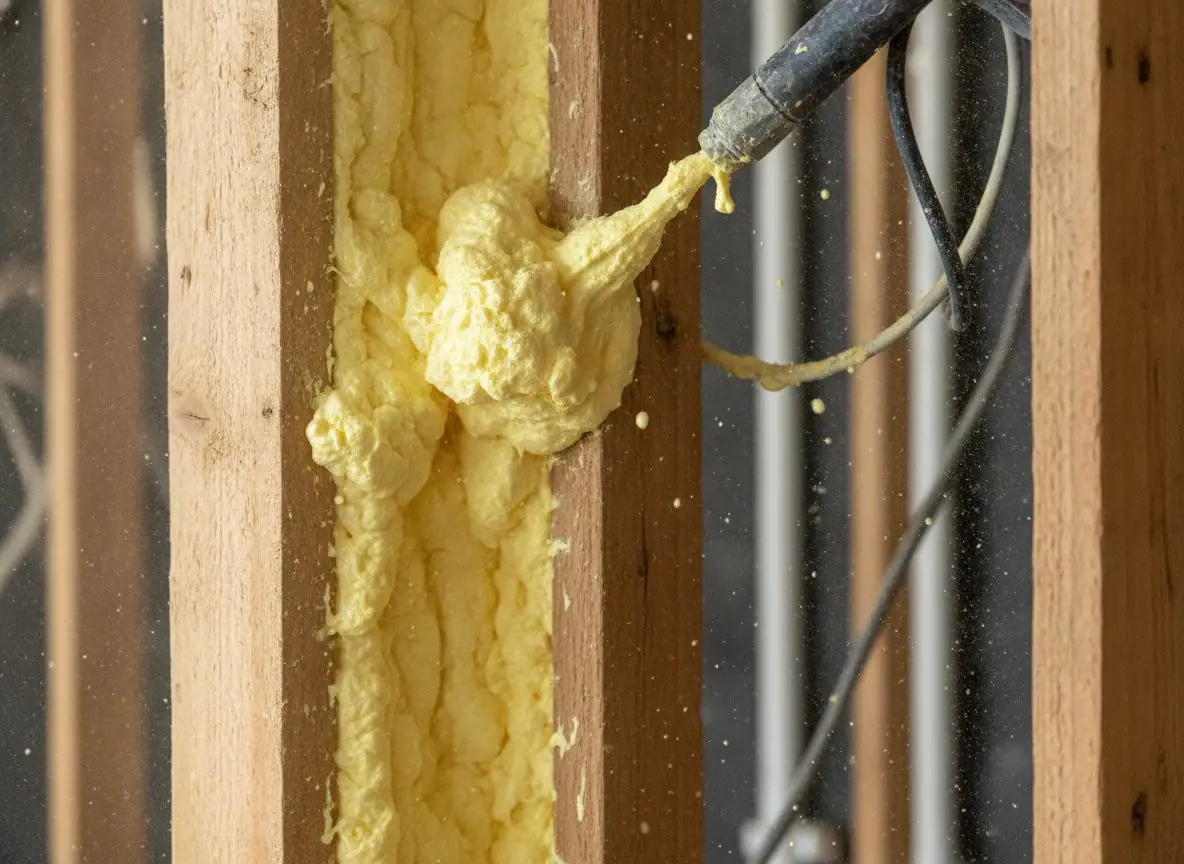
Closed-cell or open-cell spray foam requires mechanical scoring with oscillating tools and scraping before vacuum extraction. This specialized process is increasingly relevant in El Segundo as more homeowners who installed spray foam in the 2000s and 2010s now require removal due to off-gassing concerns or re-roofing projects. Learn about proper spray foam applications
Wet Removal for Contaminated Material
In cases of severe moisture saturation or confirmed mold colonization, insulation is lightly misted before removal to suppress airborne particulate release — a critical precaution during El Segundo’s windy season when interior-to-exterior pressure differentials can draw attic air into living spaces.
Specialized Hazardous Material Protocols
For pre-1980 properties with suspected vermiculite or asbestos-containing insulation, we coordinate with licensed California-certified asbestos abatement contractors, ensuring compliance with Cal/OSHA 8 CCR 1529 standards before any standard removal work begins.
Insulation Removal Cost in El Segundo, CA
Understanding the investment required for professional insulation removal helps El Segundo homeowners budget accurately and avoid underpriced services that may cut corners on safety and disposal.
Typical Price Ranges
- Standard Attic Insulation Removal (800–1,200 sq ft): $1,200–$2,400
- Large Attic or Multi-Zone Removal (1,200–2,000 sq ft): $2,400–$4,000
- Crawl Space Insulation Removal: $800–$1,800 depending on access and linear footage
- Rodent-Contaminated Insulation (includes sanitization): Add $400–$900 to base removal cost
- Spray Foam Removal: $2.50–$5.00 per square foot due to labor-intensive extraction
Cost Factors Specific to El Segundo
Attic Access Complexity: Many El Segundo bungalows built in the 1940s–1960s feature low-slope rooflines with attic clearances under 36 inches, requiring smaller-profile equipment and additional crew time — typically adding $200–$500 to standard pricing.
Read moreShow less
Contamination Level: Properties with confirmed rodent infestation or mold require additional PPE, extended sanitization protocols, and HEPA disposal — increasing costs by 25–40%.
Hazardous Material Testing: Asbestos bulk sampling and laboratory analysis adds $300–$600 before removal can begin on pre-1980 structures.
Disposal Fees: Los Angeles County landfill surcharges for insulation disposal are factored into all Cool Zone Insulation quotes — no hidden dump fees.
Call 310-861-9135 for a free, no-obligation on-site estimate.
El Segundo Neighborhoods We Serve
Downtown El Segundo (Central Residential Grid)
The blocks surrounding Main Street and Grand Avenue form the historic core of El Segundo, with a high density of Craftsman bungalows and Spanish Colonial Revival homes built between 1920 and 1950. These properties frequently contain original fiberglass or early cellulose insulation with R-values now well below California Title 24 minimums, and many show evidence of decades of moisture cycling from the coastal marine layer.
The Tree Section
Named for its streets bearing tree names (Walnut, Sycamore, Maple, Cedar), this neighborhood features predominantly post-WWII ranch-style homes built between 1945 and 1965 for aerospace and oil industry workers. Attic insulation in Tree Section homes is typically original blown-in fiberglass with measured depths of 4–6 inches — far below the current R-38 recommendation for Climate Zone 8.
Smoky Hollow / Industrial Edge Residential
Properties along the eastern fringe near Nash Street and Douglas Street sit adjacent to El Segundo’s light industrial corridor. These homes show elevated particulate infiltration in attic insulation and more frequent HVAC filter clogging, often requiring more thorough attic cleaning following insulation removal.
Beach-Adjacent West Side
Homes within three blocks of the Pacific Coast present the most severe marine moisture challenges, with insulation degradation timelines roughly 30–40% shorter than inland El Segundo properties due to direct salt air exposure and fog drip accumulation.
Insulation Maintenance Tips for El Segundo Homeowners
- Inspect Attic Ventilation Annually: Check soffit and ridge vents each fall before the winter rain season. Blocked vents are the leading cause of moisture accumulation in El Segundo attics.
- Monitor Attic Moisture After June Gloom Season: Use an inexpensive hygrometer placed in the attic to track relative humidity — readings consistently above 60% indicate a ventilation or vapor barrier problem requiring attention.
- Seal Attic Penetrations Proactively: Inspect around recessed lighting, plumbing vents, and HVAC ducts annually for gaps that allow conditioned air to escape or rodents to enter.
- Trim Roof-Adjacent Vegetation: El Segundo’s mature ficus and palm trees common in the Tree Section provide roof rat highway access — maintain a minimum 4-foot clearance between branches and rooflines.
- Schedule Post-Rain Attic Checks: After significant El Niño-pattern winter rain events (common in Southern California), inspect your attic for signs of water intrusion or moisture-staining on insulation surfaces.
- Test for Adequate R-Value Every 10 Years: Have a professional measure existing insulation depth; California Title 24 requirements for Climate Zone 8 call for R-38 in attics.
- Address Rodent Evidence Immediately: A single season of rodent nesting can contaminate an entire attic’s insulation — act at the first sign of pest activity.
Why Choose Cool Zone Insulation for Insulation Removal in El Segundo
Cool Zone Insulation is a professional insulation contractor with deep roots in the South Bay Los Angeles community. Our technicians have direct, hands-on experience working in El Segundo’s unique building stock — from the low-clearance attics of 1940s Grand Avenue bungalows to the crawl spaces beneath raised-foundation Tree Section ranch homes.
We use commercial-grade HEPA vacuum equipment, EPA-registered sanitization products, and follow all South Coast AQMD, California OSHA, and Los Angeles County disposal regulations — protecting your family, our crew, and the environment.
Every job includes a thorough pre-removal assessment, detailed documentation, and a transparent written quote with no hidden fees. After removal, our team provides a clear path forward with recommendations for replacement insulation tailored to El Segundo’s Climate Zone 8 requirements. Explore our attic insulation installation services
We serve all of El Segundo and the greater South Bay area. Call 310-861-9135 to speak with a local expert today or request your free estimate online.
FAQ
Frequently Asked Questions About Insulation Removal in El Segundo, CA
How much does insulation removal cost in El Segundo, CA?
Most El Segundo homeowners pay between $1,200 and $2,400 for standard attic insulation removal in homes ranging from 800 to 1,200 square feet. Costs increase for contaminated material, rodent damage, or low-access attics common in pre-1960 El Segundo construction. We provide free, itemized on-site quotes — call 310-861-9135 to schedule.
How long does insulation removal take in a typical El Segundo home?
Most single-family El Segundo attics are cleared within one full work day (6–8 hours). Larger homes, severely contaminated spaces, or properties requiring pre-removal hazardous material remediation may extend the timeline to 2–3 days. We always provide a project timeline estimate during the initial assessment.
Is old insulation in El Segundo homes likely to contain asbestos?
Homes built before 1980 in El Segundo — a significant portion of the city’s housing stock — may contain insulation products manufactured during the era when asbestos was commonly used. Vermiculite insulation in particular carries elevated risk. We recommend professional testing before any removal work on pre-1980 properties. We can coordinate certified asbestos testing on your behalf.
Do I need permits for insulation removal in El Segundo?
Standard insulation removal typically does not require a building permit in El Segundo. However, if removal is part of a larger renovation project involving structural work or HVAC modification, permits may be required through the City of El Segundo Building Safety Division. We advise all clients on applicable requirements during the assessment phase.
Can I stay in my home during insulation removal?
Yes, in most cases. Our containment protocols — including sealed attic access, negative-air pressure systems, and HEPA filtration — allow homeowners to remain in the property during standard removal. For projects involving confirmed mold or rodent contamination, we recommend temporarily relocating for 24 hours during active removal and sanitization.
Why is insulation removal particularly important for homes near LAX in El Segundo?
El Segundo properties within LAWA’s noise impact zones received sound insulation retrofits through the Residential Sound Insulation Program beginning in the early 1990s. Some of this blown-in insulation has now been in place for 25–30 years, has settled significantly, or was disturbed by subsequent renovation work — leaving gaps and voids that reduce both acoustic and thermal performance. Removal and reinstallation restores full effectiveness.
What happens to the removed insulation material?
All removed insulation is double-bagged, sealed, and transported to licensed Los Angeles County disposal facilities. Contaminated material (rodent waste, mold) is handled under enhanced containment protocols. We include all disposal fees in our written quotes — there are no surprise charges at project completion.
Do you offer replacement insulation installation after removal?
Yes. Cool Zone Insulation provides full-service insulation replacement immediately following removal. We offer blown-in insulation, fiberglass batt insulation, spray foam insulation, and crawl space insulation — all installed to California Title 24 Climate Zone 8 specifications appropriate for El Segundo’s coastal environment.
Schedule Your Insulation Removal in El Segundo Today
Don’t let old, damaged, or contaminated insulation compromise your El Segundo home’s comfort, energy efficiency, and indoor air quality any longer. Whether you’re dealing with moisture-soaked attic insulation, rodent-contaminated material in the Tree Section, or decades-old insulation in a mid-century Chevron-era home near Virginia Street, Cool Zone Insulation is ready to help.
Our team serves all of El Segundo with professional, safe, and fully compliant insulation removal services. We provide free on-site assessments, transparent written quotes, and start-to-finish project management.
Call us now at 310-861-9135 to speak with a local insulation expert, or reach out to schedule your free inspection. Cleaner, safer, more efficient insulation starts with one call to Cool Zone Insulation.
Get in touch
Find insulation help near you
Request a free estimate online or give us a call — our team will follow up quickly.
- Call us(310) 861-9135
- Visit2333 Utah Ave, El Segundo, CA 90245
- HoursMon-Sun 07:00-19:00