Ceiling Insulation in El Segundo, CA
Energy-Saving Ceiling Insulation for El Segundo, CA Homes — Licensed & Insured
Need ceiling insulation in El Segundo, CA? Cool Zone Insulation offers expert installation, spray foam & blown-in services. Call (310) 861-9135 for a free quote.
Ceiling insulation is the thermal and acoustic barrier installed between your living space and the roof or attic above — one of the single most impactful upgrades a homeowner or property manager can make to control energy costs and indoor comfort. In El Segundo, CA, the combination of marine coastal air, jet-stream temperature swings from Los Angeles International Airport proximity, and a building stock dominated by mid-century residential homes creates a unique set of demands that generic insulation products and out-of-area contractors simply cannot address effectively.
Cool Zone Insulation specializes in ceiling insulation services tailored specifically to El Segundo’s climate, construction styles, and local building codes. Whether you own a 1950s bungalow near Mariposa Avenue or manage a commercial property in the El Segundo Business District, our team delivers precise material selection, professional installation, and verified performance results. Call us today at (310) 861-9135 to schedule your free assessment.
Understanding Ceiling Insulation in El Segundo, CA
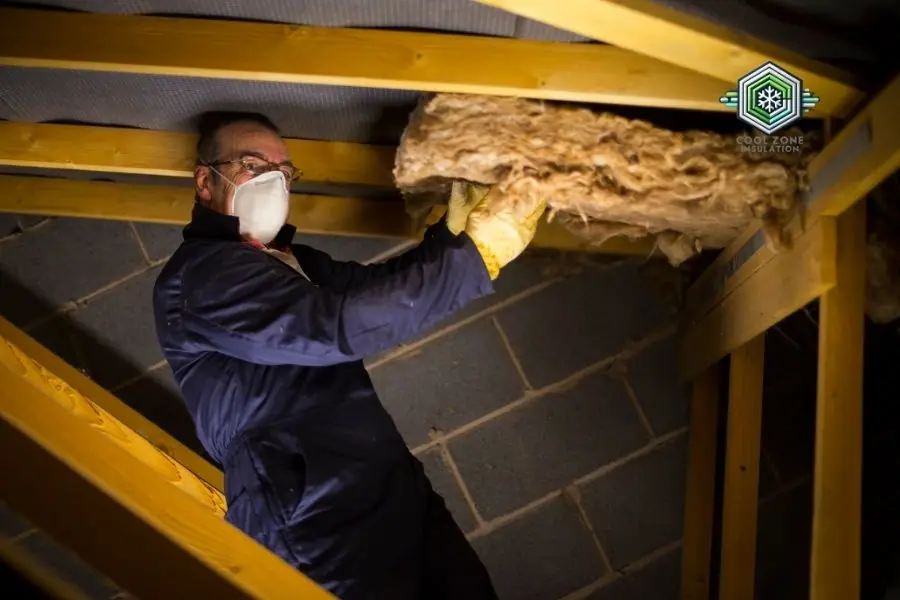
Ceiling insulation refers to any insulating material placed at the top-plane boundary of a conditioned living space — either directly above a finished ceiling (attic floor insulation) or against the underside of the roof deck (roof-plane insulation). The core function is to resist heat transfer measured by R-value: the higher the R-value, the greater the resistance to thermal flow. The U.S. Department of Energy recommends R-38 to R-60 for attic/ceiling assemblies in Climate Zone 3B, the designation that covers El Segundo and the broader Los Angeles coastal basin.
Historically, ceiling insulation in Southern California lagged behind colder regions because mild ambient temperatures masked energy losses. Homes built during El Segundo’s primary residential development boom between 1945 and 1965 — stimulated by post-war aerospace employment at the nearby Douglas Aircraft Company (now Boeing) campus — were frequently constructed with little or no ceiling insulation, relying instead on natural ventilation and operable windows. Subsequent energy crises in 1973 and 1979 prompted some retrofits, but studies conducted by the California Energy Commission found that a significant portion of Los Angeles-area homes still operate below current code minimums.
Read moreShow less
In El Segundo specifically, the building landscape is a mix of single-family residences with vented attic spaces, multi-unit apartment buildings with flat or low-slope roofs, and commercial tilt-up warehouses near Aviation Boulevard. Each building type presents a distinct ceiling insulation challenge. Vented attics can receive blown-in or batt insulation; flat-roof assemblies typically require spray foam or rigid board systems applied to the roof deck; commercial facilities may call for a hybrid approach combining air-sealing and high-density spray foam. Understanding which system matches your structure is the foundation of an effective ceiling insulation project.
Modern ceiling insulation also serves an acoustic function that is particularly relevant in El Segundo. Positioned directly under the LAX flight corridor, residents experience sustained noise events from aircraft operating on Runways 24L, 24R, 25L, and 25R. Properly specified ceiling insulation — especially high-density spray foam and blown-in fiberglass — provides meaningful sound transmission class (STC) improvements that reduce interior noise levels by 6 to 12 decibels, making a measurable difference in daily comfort.
Why Ceiling Insulation Is Needed in El Segundo, CA
Marine Climate and Coastal Temperature Swings
El Segundo sits approximately 0.8 miles from the Pacific Ocean shoreline, placing it firmly within the coastal marine influence zone. Daily temperature differentials between dawn and afternoon can reach 20°F to 28°F during summer months, a phenomenon driven by the Pacific high-pressure system and the cold California Current offshore. When the exterior swings from a cool 58°F morning to a sunny 84°F afternoon, an under-insulated ceiling becomes a thermal highway — absorbing midday heat and re-radiating it into living spaces well into the evening hours. Upgrading ceiling insulation to the recommended R-38 to R-49 range stabilizes interior temperatures and reduces the cycling demands on HVAC equipment by an estimated 20 to 40 percent according to California Energy Commission field data.
The LAX Proximity Effect on Attic Temperatures
El Segundo’s El Segundo neighborhood — particularly streets between Grand Avenue and Mariposa Avenue, and the blocks flanking Eucalyptus Drive — lies directly beneath the arrival and departure flight paths serving LAX’s south complex runways. Jet exhaust and engine heat from low-altitude aircraft operations contribute to localized thermal loading on rooftops that can push attic temperatures above 140°F on warm afternoons. Surface thermometer readings taken on asphalt-shingled homes along Indiana Street in July 2022 recorded roof deck temperatures as high as 158°F. Without adequate ceiling insulation, this extreme heat loads directly into the conditioned space below.
Salt-Laden Marine Air and Insulation Degradation
The marine air flowing inland from Santa Monica Bay carries elevated chloride concentrations. Over years of exposure, salt particulates infiltrate attic spaces through roof vents, ridge vents, and soffit openings, accelerating the degradation of older fiberglass batt insulation. Batts installed prior to 1990 in El Segundo homes frequently show compaction, moisture absorption, and facing deterioration that reduce their effective R-value by 30 to 50 percent. Annual inspection of ceiling insulation is especially important for homes in the northeast El Segundo grid — the streets closest to Dockweiler State Beach — where marine aerosol concentrations are highest.
Chevron El Segundo Refinery Microclimate
The Chevron El Segundo Refinery, operating along the western edge of the city since 1911, produces localized atmospheric conditions including elevated particulate matter on downwind days. The South Coast Air Quality Management District has documented PM2.5 exceedances in El Segundo on approximately 8 to 12 days per year in recent annual reports. Airborne particulates that enter attic spaces through unfiltered vents can settle into insulation materials, adding weight and reducing thermal performance. Properly sealed ceiling assemblies with spray foam air barriers significantly limit particulate infiltration, protecting both insulation performance and indoor air quality.
Historic Building Stock and Code Gaps
The El Segundo Planning Department estimates that approximately 65 percent of residential structures in the city were built before 1975. Title 24 of the California Building Code, which mandates minimum R-values for new construction and significant renovations, was not enacted until 1978. This means the majority of El Segundo homes were built without any enforceable insulation standard. Retrofit ceiling insulation projects in neighborhoods like the Standard Neighborhood district — bounded by Main Street, El Segundo Boulevard, Eucalyptus Drive, and Mariposa Avenue — routinely uncover zero-inch insulation depths or degraded 1.5-inch kraft-faced batts with effective R-values below R-5.
Free, no-obligation estimates
Talk to Cool Zone Insulation
Tell us what you need and we’ll take it from there.
Signs You Need Ceiling Insulation in El Segundo, CA
Temperature and Comfort Indicators
- Rooms on the top floor feel noticeably warmer than ground-floor rooms during afternoon hours, with differentials exceeding 5°F to 8°F
- Air conditioning runs continuously during typical El Segundo summer afternoons (75°F to 85°F ambient) without reaching the thermostat setpoint
- Morning condensation forms on interior ceiling surfaces during winter coastal fog events — a sign of thermal bridging through inadequate insulation
Energy and Cost Indicators
- Monthly SCE (Southern California Edison) electricity bills have increased more than 15 percent year-over-year without a change in usage habits
- Your utility bills during June–August consistently exceed neighbors’ bills for comparable square footage
- HVAC equipment is cycling more frequently than it did three to five years ago despite no change in the thermostat schedule
Physical and Structural Indicators
- Visible attic insulation depth is less than 10 inches (indicating below R-30)
- Insulation batts are yellowed, compressed flat, or show water staining from past roof leaks
- Drafts are detectable near ceiling-mounted light fixtures or attic access hatches
- Unusual aircraft noise penetration inside the home despite closed windows — a sign that acoustic insulation mass is insufficient
Urgency Signals
If you observe mold growth on ceiling drywall, evidence of rodent nesting in attic insulation, or insulation that was installed before 1980 (potential asbestos-containing materials in older vermiculite or spray products), contact Cool Zone Insulation immediately at (310) 861-9135 for a priority assessment.
Ceiling Insulation Methods and Approaches
Blown-In Fiberglass or Cellulose
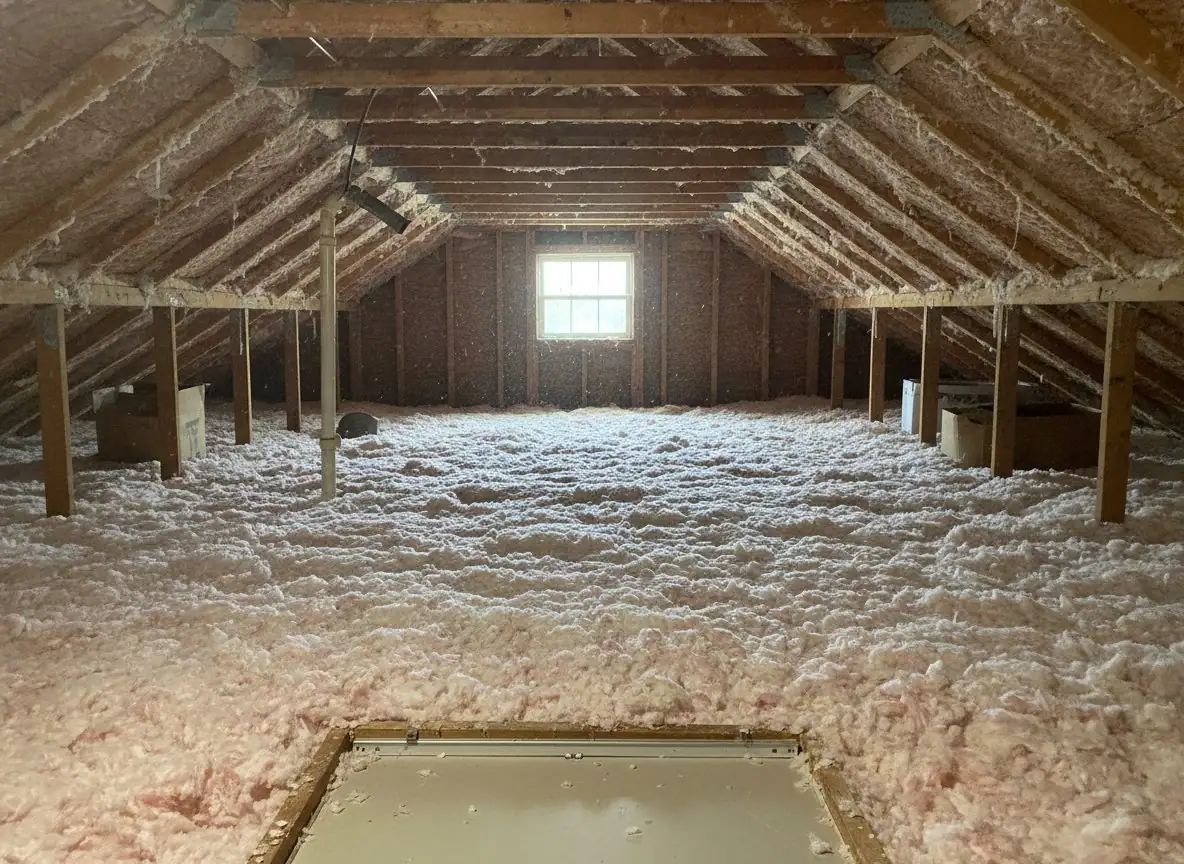
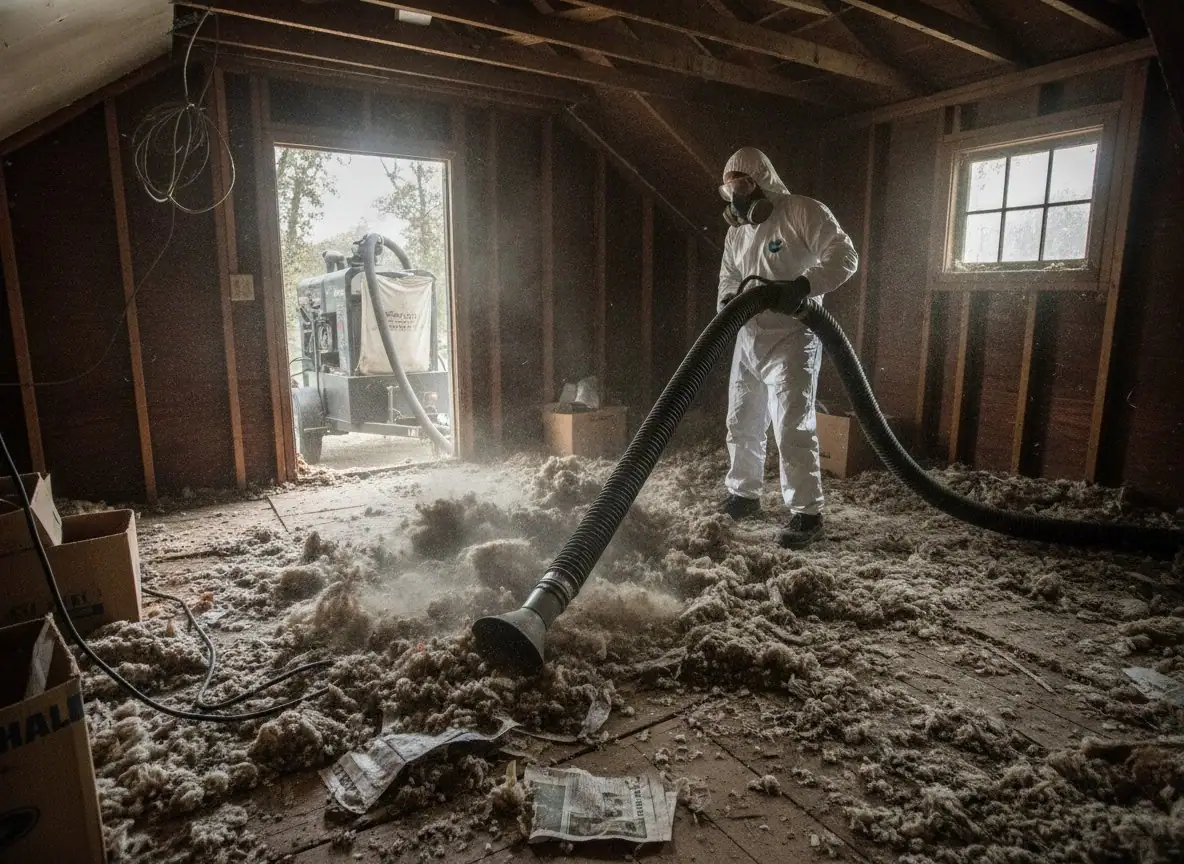
The most common retrofit method for El Segundo’s vented attic homes. Loose-fill material is pneumatically blown into the attic floor cavity to depths of 12 to 16 inches, achieving R-38 to R-49. Cellulose has a slight acoustic advantage and performs well in El Segundo homes where LAX noise reduction is a priority. Fiberglass is preferred where moisture exposure risk is higher, such as homes near the Dockweiler coastline. Explore our blow-in insulation services
Spray Foam Insulation
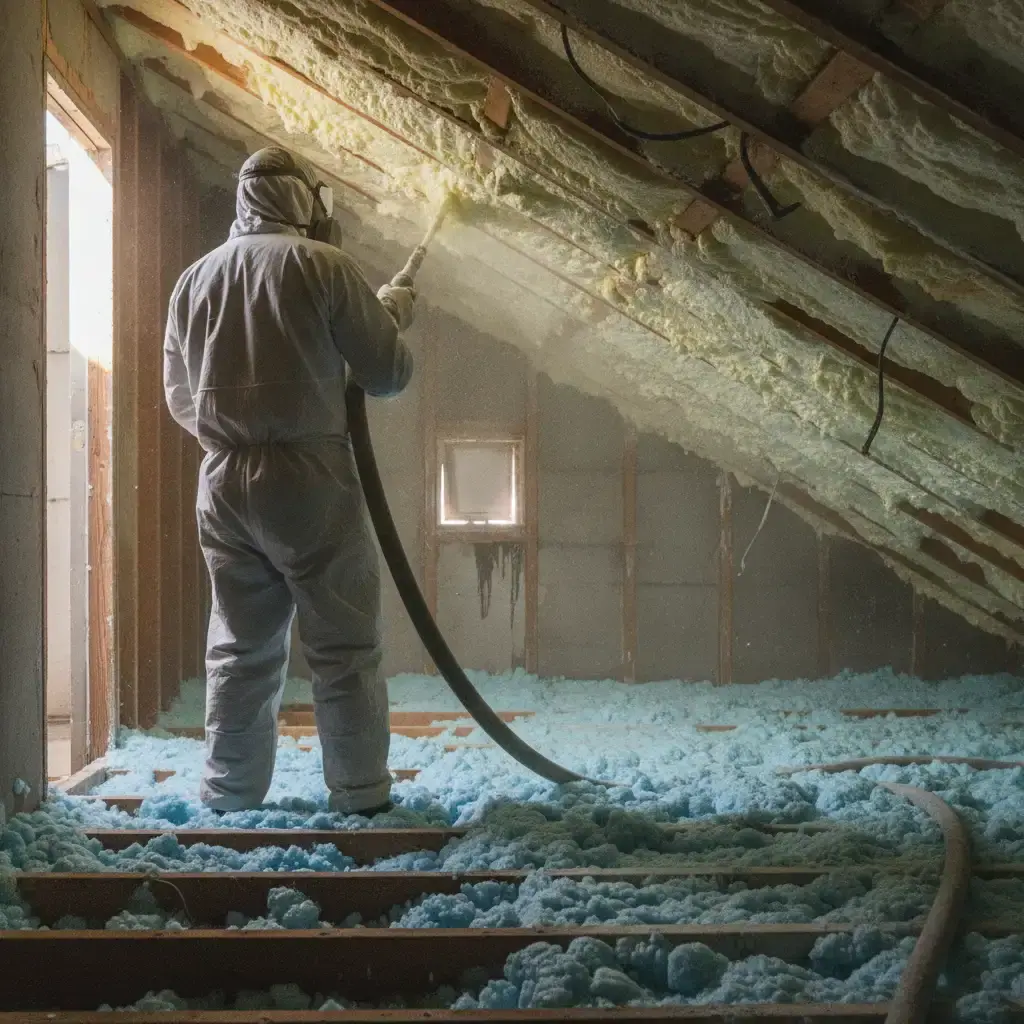
Open-cell or closed-cell spray polyurethane foam is applied to the underside of the roof deck in unvented attic assemblies, flat-roof structures, or commercial buildings. Closed-cell foam achieves R-6.5 per inch and provides a vapor and air barrier in a single application — ideal for El Segundo’s commercial tilt-up buildings along Nash Street and Douglas Street. Learn about our spray foam insulation services
Learn moreFiberglass Batt Insulation
Pre-cut batts are used in new construction or open framing situations where rafter bays are accessible. Less common as a retrofit but occasionally the right tool for El Segundo additions or garage conversions where attic access is limited.
Hybrid Systems
A two-inch layer of closed-cell spray foam applied directly to the roof deck (for air and vapor control) topped with blown-in fiberglass (for additional R-value) is an increasingly popular approach for El Segundo’s older craftsman and ranch-style homes that have complex attic geometries around dormers and knee walls.
Rigid Foam Board
Used primarily on flat commercial roof retrofits in El Segundo’s industrial zones, rigid polyisocyanurate board achieves R-6 to R-6.5 per inch and is compatible with most low-slope roofing membranes.
Ceiling Insulation Cost in El Segundo, CA
Understanding ceiling insulation costs in El Segundo requires accounting for local labor markets, material logistics, and the specific characteristics of your building. Below are current typical price ranges for the most common scenarios:
- Blown-in attic insulation (fiberglass or cellulose): $1.50 to $3.00 per square foot installed, including air sealing. A typical 1,200 sq ft El Segundo bungalow attic runs $1,800 to $3,600 complete.
- Spray foam ceiling insulation (open-cell): $1.50 to $2.50 per board foot. A standard 1,000 sq ft flat roof commercial application at 3-inch depth typically costs $4,500 to $7,500.
- Spray foam (closed-cell): $3.00 to $5.00 per board foot. Closed-cell applications for hybrid systems in residential unvented attics range from $3,500 to $8,000 depending on depth and access difficulty.
- Insulation removal (prerequisite in many El Segundo homes): $1.00 to $2.00 per square foot. Full attic removal on a 1,200 sq ft home typically adds $1,200 to $2,400 to total project cost.
Read moreShow less
Factors That Affect El Segundo Pricing
Attic access difficulty in the city’s 1950s low-pitch ranch homes increases labor time. The presence of existing radiant barrier foil (common in 1970s–1980s additions) may require removal or supplemental sealing. Permit fees through the El Segundo Building and Safety Division add $75 to $250 for most residential projects. California customers may qualify for SCE rebates of $0.10 to $0.25 per square foot on qualifying insulation upgrades, effectively reducing net project cost by $120 to $300 on a typical home.
Call (310) 861-9135 for a no-obligation quote specific to your property. See detailed ceiling insulation cost information
El Segundo Neighborhoods We Serve
Standard Neighborhood (El Segundo Historic Core)
Bounded by Main Street, El Segundo Boulevard, Eucalyptus Drive, and Mariposa Avenue, the Standard Neighborhood is El Segundo’s oldest residential district, with most homes built between 1920 and 1955. These properties frequently have zero existing insulation or severely compacted original batts. Access is typically through small scuttle hatches in hallway ceilings requiring specialized narrow-hose blown-in equipment.
East El Segundo (Near Aviation Boulevard)
Post-1960 ranch homes and small apartment buildings characterize this district. Flat-roof two-story apartment buildings here are prime candidates for spray foam ceiling systems. Commercial properties along Aviation Boulevard benefit from rigid board and spray foam hybrid approaches compliant with current Title 24 commercial energy codes.
El Segundo Adjacent to LAX Buffer Zone
Properties north of Grand Avenue face the greatest aircraft noise exposure. We routinely specify high-density blown-in cellulose at R-49+ depths in this sub-zone, combined with acoustically rated attic hatch covers, to maximize both thermal and sound transmission performance.
We also serve neighboring communities including Manhattan Beach, Hawthorne, Hermosa Beach, and Culver City.
Ceiling Insulation Maintenance Tips for El Segundo Homeowners
- Inspect insulation depth annually: Use a ruler through the attic hatch each spring to confirm insulation has not settled below your target R-value depth. A 12-inch depth of fiberglass should be maintained for R-38.
- Check attic vents after Santa Ana wind events: High-velocity Santa Ana winds (which occasionally exceed 60 mph in the LA basin) can displace lightweight blown-in material near soffit openings. Inspect and redistribute if needed after major wind events.
- Monitor for moisture after El Niño rain seasons: El Niño years bring significantly above-average rainfall to the El Segundo area. Inspect for water staining on ceiling drywall and attic insulation after rain events exceeding 1 inch.
- Keep attic vents clear of debris: Marine fog deposits and bird nesting materials can clog soffit vents, trapping moisture and degrading insulation performance. Clear vents each spring.
- Seal new penetrations promptly: Any new recessed lighting, ceiling fan, or HVAC work creates new air bypasses. Reseal all penetrations immediately after any ceiling work.
- Schedule a professional thermal scan every 5 years: Infrared imaging detects hidden moisture damage and insulation gaps that visual inspection misses — especially important given El Segundo’s marine salt-air environment.
- Replace insulation older than 25–30 years: Fiberglass and cellulose installed before 1995 in El Segundo has likely lost 20 to 35 percent of original R-value through compaction and moisture cycling.
Why Choose Cool Zone Insulation in El Segundo, CA
Cool Zone Insulation is a locally operating insulation contractor with deep expertise in the specific building types, climate conditions, and code requirements of El Segundo and the South Bay region. Our technicians are trained in Title 24 compliance requirements, California’s Green Building Standards Code (CALGreen), and the specific acoustic performance demands created by LAX flight operations over El Segundo.
We carry full general liability insurance and workers’ compensation coverage on every project. Our team uses calibrated thermal imaging cameras on 100 percent of jobs — not just for marketing purposes, but as a genuine quality-control tool to confirm every square foot of ceiling insulation meets the specified R-value. We document all work with photographic records provided to the homeowner for rebate applications and future reference.
Read moreShow less
Our service area covers all of El Segundo and extends to Manhattan Beach, Hermosa Beach, Redondo Beach, Torrance, Hawthorne, Inglewood, Culver City, Westchester, Playa del Rey, Marina del Rey, Ladera Heights, Lawndale, Gardena, and Palos Verdes Estates. Call us at (310) 861-9135 — we answer calls Monday through Saturday and offer same-week assessment scheduling for El Segundo properties.
FAQ
Ceiling Insulation FAQs — El Segundo, CA
How much does ceiling insulation cost in El Segundo, CA?
Most El Segundo homeowners pay between $1,800 and $5,000 for a complete ceiling insulation retrofit, depending on attic size, existing insulation condition, and material chosen. Blown-in projects on standard 1,000 to 1,400 sq ft bungalows run $1,800 to $3,600. Spray foam applications on flat-roof structures or commercial properties range from $4,500 to $10,000+. SCE utility rebates can offset $120 to $300 of project cost for qualifying upgrades.
How long does ceiling insulation installation take in El Segundo?
The majority of residential ceiling insulation projects in El Segundo are completed in a single day — typically 4 to 8 hours including removal of old material, air sealing, and new insulation installation. Commercial projects or unusually large or complex attic assemblies may require two days.
Do I need a permit for ceiling insulation in El Segundo?
In most cases, insulation-only projects in existing homes do not require a building permit from the El Segundo Building and Safety Division. However, if the project includes electrical work (modifying recessed lighting for IC-rated fixtures), HVAC modifications, or is part of a larger remodel, a permit may be required. Cool Zone Insulation clarifies permit requirements during the assessment phase at no charge.
Will ceiling insulation actually reduce the aircraft noise from LAX in my El Segundo home?
Yes, meaningfully so. High-density blown-in cellulose and closed-cell spray foam provide sound transmission class (STC) improvements of 6 to 12 decibels when properly installed in ceiling assemblies. While insulation alone will not eliminate aircraft noise entirely, residents in El Segundo’s Standard Neighborhood and Grand Avenue corridor typically report a noticeably quieter interior environment after upgrading from inadequate batt insulation to dense-pack or spray foam systems.
How do I know if my El Segundo home has enough ceiling insulation?
The quickest check is to access your attic hatch and use a ruler to measure existing insulation depth. Less than 10 inches of blown-in fiberglass (approximately R-30) indicates the insulation is below current California Title 24 recommendations of R-38 for the coastal climate zone. If you see bare attic floor joists, compacted yellow batts thinner than 4 inches, or any vermiculite-type granular material (a potential asbestos indicator in pre-1980 homes), call Cool Zone Insulation immediately for a professional assessment.
What is the best type of ceiling insulation for El Segundo’s climate?
For vented attic homes — the most common configuration in El Segundo — blown-in cellulose at R-38 to R-49 depth offers the best combination of thermal performance, acoustic benefit (relevant for LAX noise), and moisture management. For unvented or flat-roof applications, closed-cell spray foam is the superior choice for its air-sealing, vapor retarder, and structural adhesion properties. Cool Zone Insulation recommends the specific material after assessing your individual building’s ventilation design, roof type, and existing conditions.
Can old insulation in my El Segundo home contain asbestos?
Yes, if your home was built before 1980. Certain older insulation products — especially vermiculite attic insulation and some spray-applied ceiling coatings — may contain asbestos fibers. Do not disturb suspected material. Cool Zone Insulation technicians are trained to identify suspect materials during assessment and will recommend certified asbestos testing through a licensed California CDPH-certified inspector before any removal work begins.
Does Cool Zone Insulation serve areas near El Segundo?
Yes. In addition to El Segundo, we serve Manhattan Beach, Hermosa Beach, Redondo Beach, Torrance, Hawthorne, Inglewood, Culver City, Westchester, Playa del Rey, Marina del Rey, Ladera Heights, Lawndale, Gardena, and Palos Verdes Estates. View our full service area map
Get Your Free Ceiling Insulation Assessment in El Segundo Today
Don’t let an under-insulated ceiling drive up your SCE bills, strain your HVAC system, or let LAX flight noise disrupt your home. Cool Zone Insulation is ready to inspect your El Segundo property, identify exactly what your ceiling assembly needs, and provide a clear, written quote with no pressure and no surprises.
Call us now at (310) 861-9135 to schedule your free on-site assessment — same-week appointments available for El Segundo homeowners and property managers. We serve El Segundo and all surrounding South Bay communities, Monday through Saturday.
Request a Free Quote Online or call (310) 861-9135 to speak directly with a Cool Zone Insulation specialist today.
Get in touch
Find insulation help near you
Request a free estimate online or give us a call — our team will follow up quickly.
- Call us(310) 861-9135
- Visit2333 Utah Ave, El Segundo, CA 90245
- HoursMon-Sun 07:00-19:00